Frequently Asked Questions
What exactly is gynecomastia and how do I know if I have it?
Gynecomastia can be defined as the presence of any excess tissue on a male chest and it is often breast tissue mixed with fatty tissue. It frequently occurs in three phases of life. It can occur in a newborn but frequently disappears. It often occurs during puberty and disappears in many young men, although it may persist forever in some of them. It can also occur later in life due to a variety of factors, which include various diseases (including some cancers), hormonal irregularities, use of bodybuilding (anabolic) steroids, various supplements, marijuana, side effects of various medications, etc.
Oftentimes there are strong hereditary factors as well. Gynecomastia is not related to obesity but may coincide with it. It may be as small as a firm area of tissue just under the nipple or as large as a DD cup pendulous breast.
How is your procedure performed?
One probable reason for the huge jump in the number of male breast reduction surgeries over the past several decades is the increased awareness of treatment options as a result of the internet revolution. Some of the increase in gynecomastia surgery is definitely related to the spike in the number of males suffering from obesity. However, there seems to be a large number of young men in their 20’s and 30’s who never had the normal resolution of the so-called ‘physiological gynecomastia’. Instead, their breast enlargement either remained the same or actually increased in size over the next few years. This persistence of breast tissue in young men may also be the result of ingestion of chemicals that are known as ’Endocrine Disruptors’, which is a class of chemicals known to contaminate our water and food supplies.
Some guys feel that if their chest is soft, that it is all fat and then they can remove it by diet and exercise. Not true — for an explanation, please see below.
How long should I take off from work following surgery?
It depends on your profession. Generally, you should plan to take about 2-3 days off if you work in a comfortable office environment. You should plan to take about one to two weeks off if you perform heavy lifting or strenuous activities for work.
How long should I abstain from exercise following surgery?
You should avoid strenuous exercise for about three to four weeks. Light activities and walking may resume immediately after surgery. Professor Dr.Faisal Akhlaq recommends that all his Philadelphia / Delaware gynecomastia patients begin chest exercises at 3-4 weeks to shape and sculpt the chest area. This is important for proper healing and to lessen the risk of postoperative complications.
How long should I wear a compression garment following surgery?
You should wear a compression garment for four weeks after surgery or as directed by Professor Dr.Faisal Akhlaq . The compression garment helps minimize postoperative swelling and provides support for the treated area while you heal.
If I am traveling from out of town, how long should I plan to stay in the area following surgery?
As an out-of-towner, you should plan to stay in the area for five days to one week following surgery. Please visit the Out-of-Town Patient Information page for more details.
How much does gynecomastia treatment cost?
Gynecomastia treatment ranges in cost, depending on the complexity of your situation and surgical procedure. On average, the one hour Gynecomastia male breast reduction surgery costs $6,720. Male Breast reduction surgery, a 2 hour surgery that requires a more involved process and a longer scar that is under the actual breast, is around $8,400. This includes the cost of surgery, operating room, anesthesia and follow-up appointments.
Is gynecomastia treatment covered by insurance?
Insurance does not usually cover male breast reduction surgery and/or liposuction of the chest area. Rarely, insurance may cover the procedure if the gynecomastia is caused by a separate medical condition, such as a hormone-producing tumor.
What will my scars from surgery look like?
Professor Dr.Faisal Akhlaq typically makes the 1-inch incision for male breast reduction surgery around the periphery of each areola, so it is hidden by the pigmented skin in that area. If you need liposuction to reduce fatty tissue in the chest area, Professor Dr.Faisal Akhlaq makes the 1/3 inch incision in the underarm area, where it is not easily visible. Also note that with proper care scars fade within about a year after surgery and may be nearly invisible with time.
Are surgical results permanent?
Yes, your results are permanent, only in rare cases does it come back. With true gynecomastia, Professor Dr.Faisal Akhlaq excises most of the excess glandular tissue, so gynecomastia does not typically come back unless you stimulate the growth of remaining breast tissue with steroid or other drug use. With pseudogynecomastia, Professor Dr.Faisal Akhlaq performs liposuction in the chest area and removes fat cells. These removed fat cells cannot grow back. However, minor weight gain may cause the remaining fat cells to become enlarged, and major weight gain may cause new fat cells in the treated and untreated area to grow.
What type of anesthesia is used during surgery?
Professor Dr.Faisal Akhlaq uses general anesthesia for male breast reduction surgery and/or liposuction in the chest area. Another option is twilight sedation where you are awake but comfortable, and feel no pain during the surgery.
Do I need to stay overnight at a hospital or medical center following surgery?
Professor Dr.Faisal Akhlaq typically performs male breast reduction surgery and/or liposuction of the chest area on an outpatient basis, so you do not need to stay overnight following the procedure. However, you will recover at the surgical center or hospital for a few hours directly after surgery, and a responsible adult must pick you up from surgery and stay with you the first night following surgery.
What age do I have to be to undergo gynecomastia treatment with Professor Dr.Faisal Akhlaq?
Professor Dr.Faisal Akhlaq evaluates each case individually. You do not have to be a certain age; Professor Dr.Faisal Akhlaq has provided gynecomastia treatment for teens as young as 13 and adults as old as 65. However, you do need to be in good overall health. Professor Dr.Faisal Akhlaq will determine if you are a suitable candidate for the procedure during your consultation.
Can Professor Dr.Faisal Akhlaq perform multiple plastic surgery procedures at one time?
Yes, it is common for Professor Dr.Faisal Akhlaq to perform multiple cosmetic procedures at the same surgery. Often men will have liposuction of the abdomen and flanks/love handles, tummy tucks, nose reshaping or rhinoplasty and facial rejuvenation surgery performed at the same time as their gynecomastia surgery.
GENERAL
Can gynecomastia turn into cancer?
Although there is no proof of a causal relationship between gynecomastia and male breast cancer, it is known that any condition which results in excess estrogen (female hormones) relative to androgens (male hormones) increases the risk of both benign (gynecomastia) and malignant (cancer) growth of male breast tissue. Examples of risk factors for such abnormal growth of male breast tissue would include aging, obesity, alcoholism, liver disease, estrogen treatment for i.e. prostate cancer, and Klinefelters syndrome.
What are some of the warning signs that a more serious problem than gynecomastia may exist?
If you notice any type of irregular breast mass, particularly if it is found on one side, not directly beneath the areola, bleeding from the nipple, or unexplained pain you should seek medical attention in order to avoid missing some other type of serious condition.
Can gynecomastia be present without one knowing it?
In many cases, a patient will gradually develop fatty breast enlargement which diffusely involves the majority of the anterior chest. These patients may not be aware of it because it develops so gradually. Gynecomastia can be missed, especially if the patient is overweight and in cases when there is minimal subareolar fibrous tissue.
Often, patients with ‘puffy nipples’ will come in wanting them to be corrected, not realizing that enlarged underlying male breast tissue is actually causing enlarged, ‘puffy’ nipple areolar complex (the nipple and surrounding pigmented skin). Breast tissue growth is usually gradual, so it often is not noticed until it becomes quite severe.
Patients with well-developed ‘pectoralis’ muscles may also have significant gynecomastia that is mistaken for enlarged muscles.
What is the difference in the feel of the breast with “True” versus “Pseudo-Gynecomastia”?
With so-called ‘Pseudo-gynecomastia’, the breast feels soft and homogenous throughout, much like a similarly sized female breast. In contrast, ‘True’ gynecomastia will feel like a firm, well defined disk of tissue directly beneath the areola and surrounding skin. The majority of patients seen at Seattle Gynecomastia Center have a combination of both diffuse fatty enlargement as well as varying amounts of fibrous subareolar tissue.
How do I tell if my breast enlargement is caused by fatty tissues or breast tissue?
In general, breast tissue has a firmer consistency than the fatty component. If the breast is large, it might be difficult to feel this firm tissue however it becomes more evident following liposuction of the fatty component.
Are mammograms performed on men?
Yes. Whenever the diagnosis of breast cancer is entertained, a mammogram should be performed and used as part of the complete evaluation of a suspicious area of breast tissue.
Does insurance pay for male breast reduction surgery?
Although, it is well known that a male’s psychological health can be severely affected by gynecomastia and improved with surgical treatment, in our experience, patients have not been successful in getting their insurance companies to pay for male breast reduction surgery of any kind.
Also, male breast reduction surgery is no doubt a ‘reconstructive’ procedure in the sense that it restores the normal form of the body. Thus, an argument could certainly be made that insurance companies should pay for male breast reduction surgery, since other forms of reconstructive surgery are generally covered by most insurance company plans.
How old is too old to have male breast reduction surgery?
There is no age limit on undergoing male breast reduction surgery. The most important factor in the evaluation of a patient for surgery is their current medical health. Patients with diabetes, heart problems, or high blood pressure, kidney or liver problems may not be good candidates, depending on the severity of their disease and how well it is controlled. A seventy-year-old patient with no medical problems is a better candidate for surgery than a 40-year-old with poorly controlled diabetes.
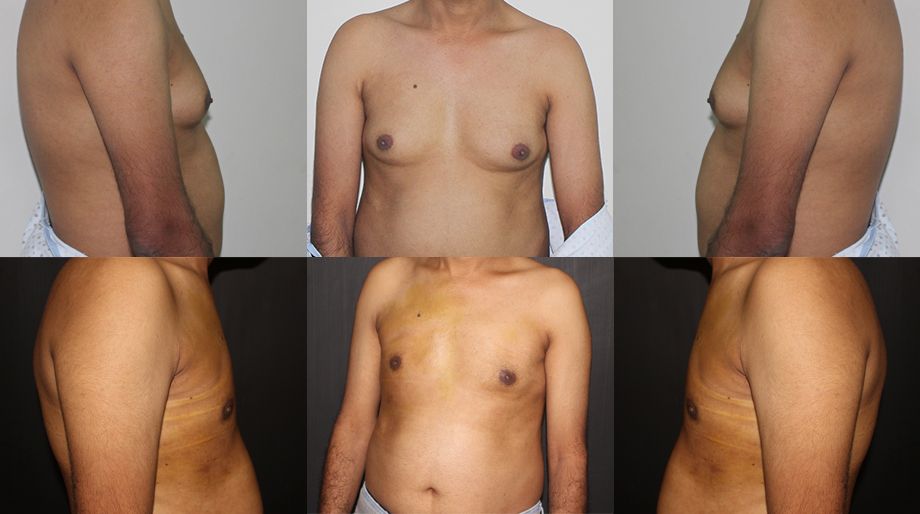
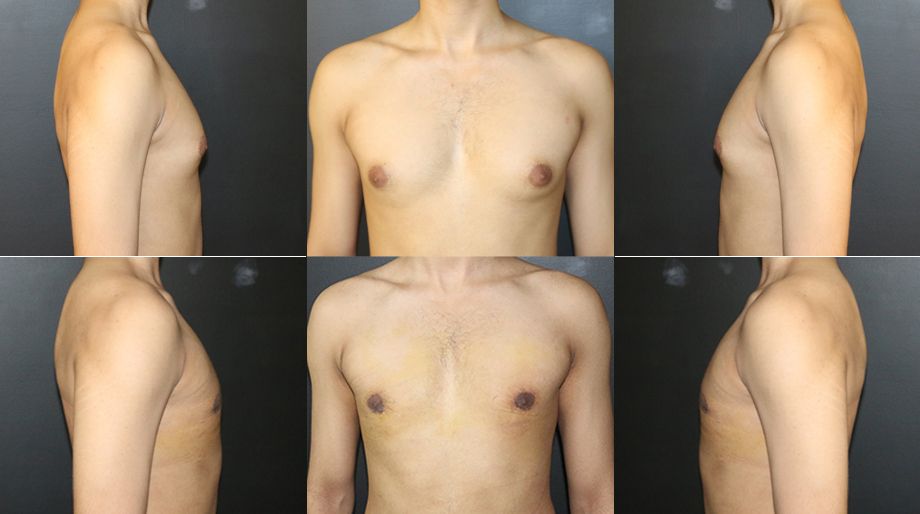
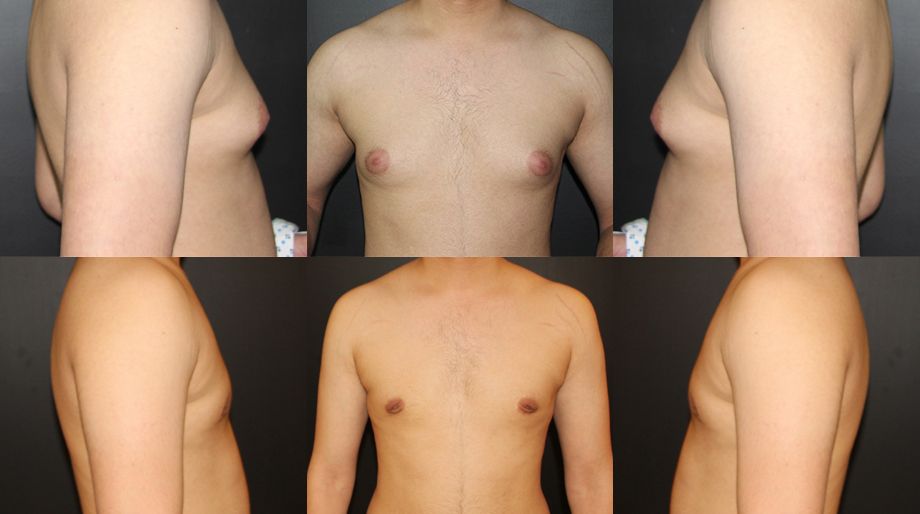
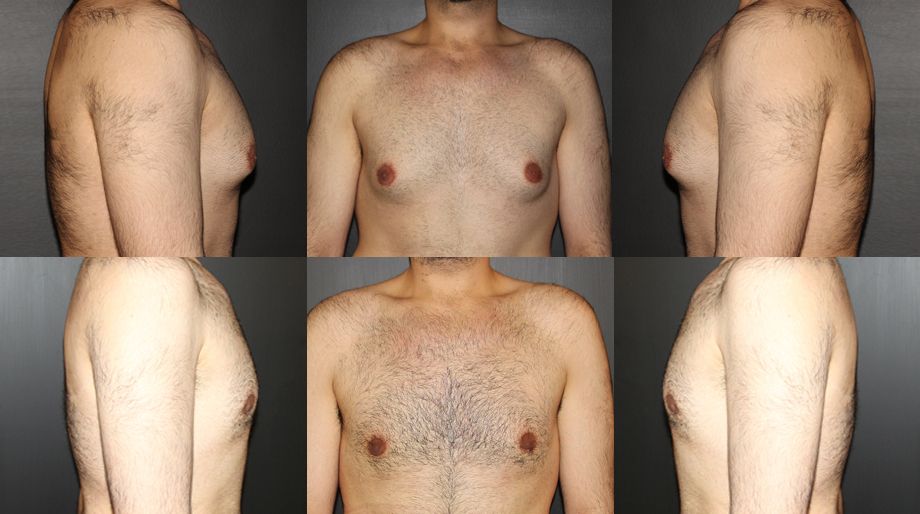
Before and After Gynecomastia Photo Galleries
When choosing a Plastic Surgeon, photographs and reviews tell the story. Professor Dr. Faisal Akhlaq provides hundreds of multi-angle before and after photos and has hundreds of patient reviews. One of the safest Gynecomastia Surgery by the hands of Professor Dr. Faisal Akhlaq Ali khan.